

Cooking up change
CASE STUDY – The transformation of Esquel’s dining operations shows how improving employee wellness, work conditions, and skills can unlock productivity, engagement, and long-term sustainability across operations.
Words: Queenie Huang
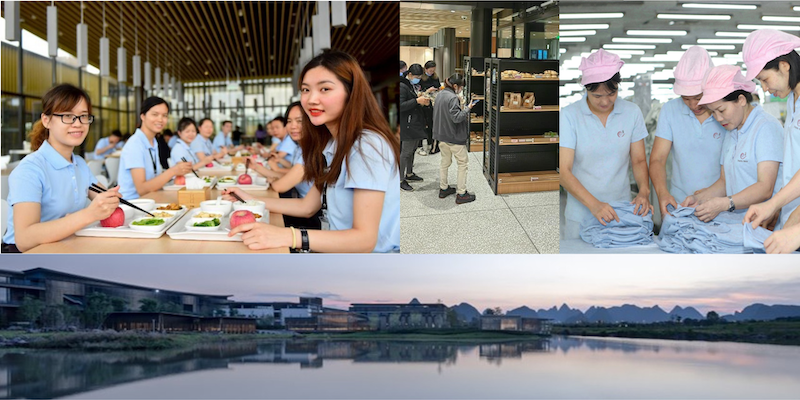
A factory’s dining hall is hardly a place that comes to mind when you think about a lean transformation. Yet at Esquel’s Guilin manufacturing site (also known as Integral, its sustainable development garden), a very significant improvement initiative took place just there.
This experiment was a deliberate attempt to live up one of the company’s core beliefs: that people are the foundation of sustainable performance. For a company with 48 years of history and a fully integrated textile supply chain—from cotton seed research to retail brands—the shift toward becoming a knowledge-based company that keeps people at its core requires rethinking how employees experience work every day. And that included lunch.
Like many industrial companies in China, Esquel is adapting to an evolving workforce. Education levels are rising, employees are staying longer, and experience is deepening across the organization. This presents a meaningful opportunity: to build a workplace that meets the higher aspirations of a more experienced workforce, while sustaining the productivity and engagement that drives long-term success.
Health data offered a clue. Internal reports showed that half of the most common employee health issues were linked to diet. At the same time, the dining experience itself was far from supportive. Like many traditional factory canteens, ours used to be crowded and purely functional. Workers queued, rushed through lunch, and left. Kitchens were hot, manual, and unattractive workplaces, with limited opportunities for skill development. Because we consider people our most valuable asset, this was a problem we had to address.
RETHINKING DINING AS A SYSTEM
Our response was not to “upgrade” the canteen, but to redesign the entire dining system—from food quality to workflows, from employee experience to staff development.
From the diner’s perspective, the transformation focused on three elements: better food, better experience, and better habits.
Meals were redesigned in partnership with a local university, resulting in over 500 seasonal menu combinations tailored to different needs. Instead of maximizing variety daily, Esquel limited choices to ensure quality, safety, and nutritional balance. Ingredients were sourced locally to guarantee freshness.
The dining environment itself changed dramatically. New facilities were designed as welcoming, even inspiring spaces—built around natural surroundings, offering areas for relaxation and connection. Different dining zones, including vegetarian options and cafés, created a more inclusive and attractive experience.
Technology plays a crucial role. A mobile app allows employees to pre-order meals, reducing waiting times and enabling more accurate planning. It also provides nutritional information and encourages healthier choices, turning dining into a learning process rather than a passive activity.
Importantly, we understood that awareness drives behavior. Training sessions, wellness programs, and initiatives like the “Healthy Champion” campaign helped employees build lasting habits. It was very rewarding to see participation grow from a few dozen to nearly full engagement across the workforce.
TRANSFORMING THE WORK BEHIND THE FOOD
Equally significant was the transformation of the dining operation itself.
Traditionally, kitchen work is physically demanding, repetitive, and undervalued. Esquel changed both the environment and the nature of the work. Kitchens were redesigned to improve ergonomics, safety, and comfort. Automation (such as vegetable processing and rice dispensing) reduced manual strain and freed time for higher-value activities.
The introduction of pre-ordering enabled data-driven planning. Procurement, inventory, and production could now be aligned with actual demand, reducing waste and variability. Standardized processes ensured consistency in quality and safety.
This operational improvement was informed at all times by Lean Thinking. Dining staff began to engage in continuous improvement, data analysis, and problem solving, their roles evolving from manual execution to knowledge-based work.
With that shift came new skill requirements: nutrition expertise, analytics, planning, and process improvement. Where others looked outward for new talent, we looked inward—investing in the growth and development of the people already with us. Through structured on-the-job learning and training, our people are upgrading their capabilities and career paths.
The results are tangible. Productivity in kitchen operations increased by more than 50%. Employees advanced within the organization. And the dining function, once seen as low-skilled and undesirable, became a source of pride and development.
MEASURING WHAT MATTERS
Esquel also approached the transformation with a clear sustainability lens. A measurement system was developed across four dimensions: environmental impact, social capital, human capital, and business performance. This allowed us to track not only operational improvements but also broader outcomes, such as employee health, engagement, retention, and long-term value creation.
The dining transformation thus became a microcosm of Esquel’s broader ambition to align business performance with human and environmental sustainability.
Looking back, it is striking how great an effect improve such a seemingly basic process had on our transformation. Lean teaches us to start from the every-day work, from the places where value is created and where problems are hidden. In our case, the dining hall was one such place, and it turned out to be central to how people experienced the company.
Today, we are moving toward a “Dining 3.0” model, integrating broader wellness initiatives and strengthening its role in the community. The journey continues, but the principle remains the same: transformation starts with people and, sometimes, with lunch.

THE AUTHOR

Read more


FEATURE – This year, PL will try to understand what the future of work looks like in a world with AI. To kick us off and make us think, we publish an article that is the result of a one-hour conversation between a human and a machine.
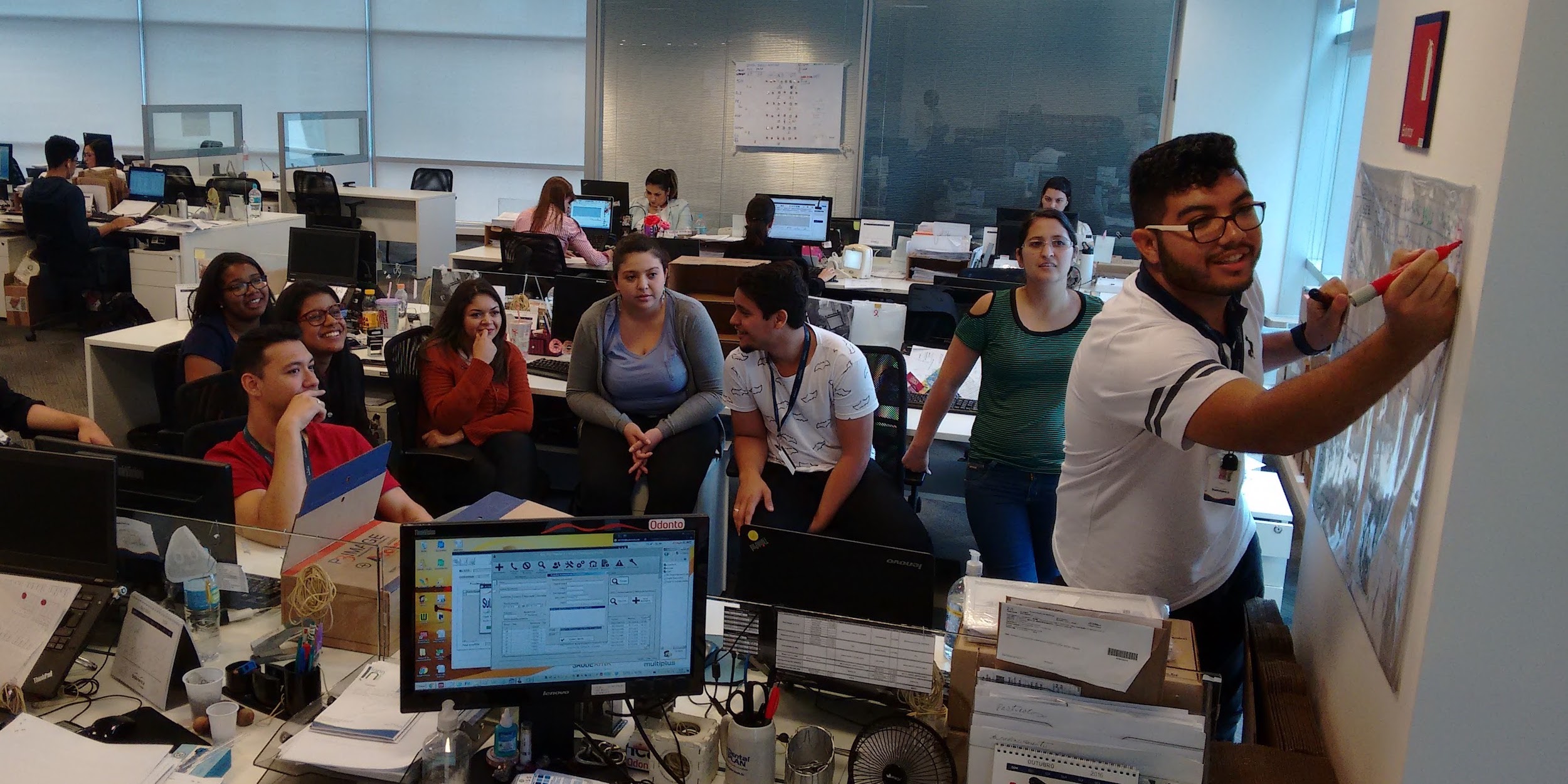
CASE STUDY – In a Brazilian insurance company, a team worked hard to streamline the revision of dental claims – a great example of Lean Thinking in an administrative process.

FEATURE – In this new series, the author will walk us through some uncommon ways to apply lean – with a particular focus on establishing productive and enjoyable relationships. In the first instalment, he introduces the concept of lean parenting.
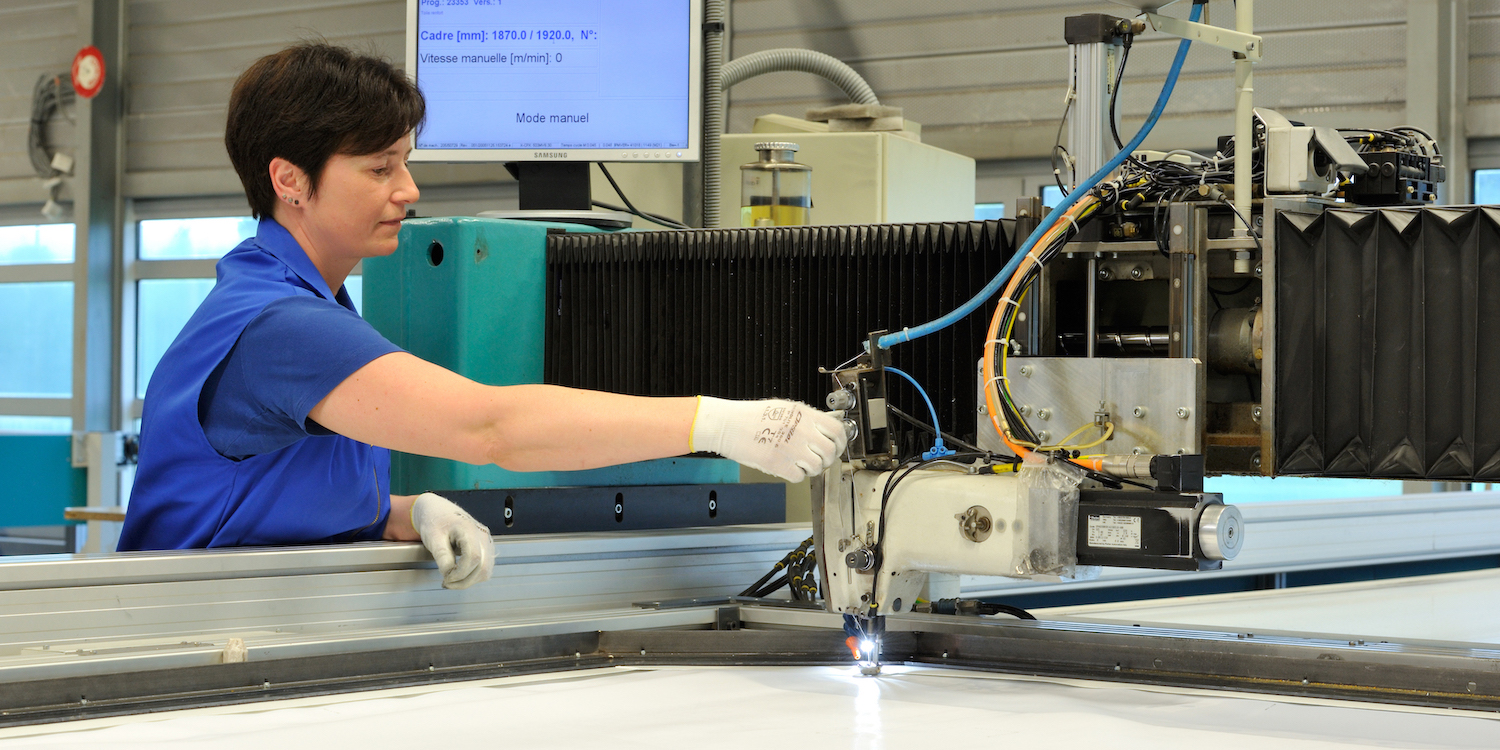
NOTES FROM THE GEMBA – It can take time to challenge our misconceptions and set off on a lean journey. Once we get it, however, it’s hard to stop the improvements, as this French company found out.
Read more

FEATURE – For this Chilean equipment distributor and service provider, what began as a simple waste problem became a lesson in observation, behavior change, and the power of method.

THE LEAN BAKERY - For the past decade, lean has fuelled the growth of a chain of cafes/bakeries in Barcelona. With 100 now open, the Retail Manager explains how lean helps them manage a booming business.

OPINION – The team at Instituto Lean Management in Barcelona comments on recent news from the Catalan healthcare sector and reflects on lean sustainability.

INTERVIEW — Ahead of next week’s Lean Global Connection, one of our speakers talks about how the comprehensive lean transformation of Indonesian food company Garudafood.