


Toyota’s answer to knowledge walking out the door
FEATURE - Almost nothing his senpai taught him was written down, says the author — and that, he argues, is the knowledge most organizations are quietly losing.
Words: Fran Noto – Senior Lean Coach at Lean Institute Indonesia and a former senior leader at Toyota Southeast Asia
The drill that machined the oil gallery holes in a cylinder block kept breaking. In my report on the problem, I wrote that the likely cause was the spindle bearing. I was fairly confident. I had seen failures like this before, and the bearing seemed the obvious suspect.
My senpai read the report and asked me one question: "How do you know it's the bearing?"
The honest answer was that I didn't. My conclusion rested on experience and intuition, not evidence, and he saw that immediately. He sent me back to the gemba to spend an entire day watching the machine during production, looking carefully for any abnormality and collecting facts before drawing a conclusion.
That day, the maintenance team and I observed the process together, focusing on two things: spindle vibration, and the alignment of the spindle with the drill guide bushing. The vibration was not the problem. What we found was a lack of concentricity between the spindle and the bushing — the drill was being held on one centerline and guided on another, so it bent slightly with every rotation until it broke. The bearing I had been so confident about was in good condition. Had I replaced it, the drills would have kept breaking.
"How do you know?" I have thought about this question many times since. It is simple, but it forces you to separate what you assume from what you actually know. Today, when one of my junior colleagues explains the cause of a problem without facts to support it, I find myself asking the same thing, "How do you know?"
The man who first asked me that question was Endo Haruki-san, my shokuba senpai at Toyota. Almost nothing he taught me was written down anywhere. How to read the wear on a cutting edge, how many times to observe a cycle before you trust the number, how to tell when a report is hiding an assumption — none of it was in a manual, and none of it could have been. It lived in him, and in the other senior people around me, and one day it would leave the building with them unless somebody had taken it from them first.
Every organization I have worked with since faces this problem, and most are losing the race. Toyota's answer was not a better document. It was to put a junior beside a senior and make the transfer somebody's job — which also happens to be one of the clearest expressions of what Toyota means by respect for people.
WHO IS A SHOKUBA SENPAI?
Shokuba (職場) means workplace, and senpai (先輩) means a senior or more experienced colleague. At Toyota, an experienced employee is asked to guide, coach, and support someone taking on work they haven’t done before (either because they are new to the company or simply working on a process for the first time), until they can do it independently.
That someone is not always a new recruit. When I was assigned Endo-san as my senpai, I had already been with Toyota for five years, but as a tooling engineer. Now I was setting up a machining line as a process engineer. This was unfamiliar work, with real safety risks, and there was a lot for me to learn about it. The need for a senpai arises every time someone moves into work they haven't done — a transfer, a promotion, the adoption of a new technology, a move to a new plant. Treating pairing as something you do only for new hires misses most of the occasions when it matters.
The senpai is usually not the junior’s direct supervisor. Because the relationship sits outside the formal reporting line, juniors feel freer to ask questions, raise concerns, and admit mistakes without fear. It creates a space where it is safe to learn, experiment, and grow.
A senpai teaches the job, but the job is only the beginning. Through daily work, they pass on the Toyota way of thinking: safety as a value, discipline in following standards, how to communicate with operators and other departments, and how to solve problems. The junior learns not only what to do but why it matters. The development of character and mindset happens alongside the transfer of technical skill, every day, through real work rather than in a classroom.
The system was less formal than outsiders might expect. My senpai was chosen by my group manager — a senior colleague from my own department, not my boss. He looked after me, not a group of juniors. There was no curriculum, no handbook, and no set duration. The guidance simply continued until I was considered competent. He had received no special training for the role either. His own experience was the guiding principle.
This is what makes the shokuba senpai approach so unique and effective. A system with no documentation and no standard work still produced consistent teaching across the company, year after year. It worked because the standard lived in the senpai themselves. Endo-san taught me the way he had been taught, and he expected me to pass it on the same way.
I want to be concrete about exactly what knowledge was living in him that no document had captured.
WHAT NO MANUAL CONTAINS
Some of what a senpai teaches can be written down. Much of it cannot.
One of my responsibilities was to analyze the life of the cutting tools used in machining. From my senpai, I learned how to assess tool wear, how to identify the problems occurring at the cutting edge, and how to decide on the right countermeasure. None of this was written in any SOP or manual. It was practical know-how he had built over many years, and the only way to acquire it was to work alongside him.
One of the most important things I learned, which proved invaluable later on whenever I carried out process kaizen, came when one day, using a magnifying glass, Endo-san pointed out the wear on the cutting edges of both drills and other cutting tools. He showed me an example of severe, rapid wear caused by a machine cutting speed that was too high and incompatible with the tool material. Consequently, the kaizen measure implemented was to modify the cutting tool material — by enlisting the help of a toolmaker — to ensure it could withstand high-speed cutting. Slowing the machine down would have cured the wear immediately, but it would also have lengthened the cycle time, which was not acceptable. So the tool changed instead.
Every organization is full of tacit knowledge like this (some of it belonging to the realm of social, rather than technical skills): an intuitive sense of a machine's condition, the ability to really observe a process, knowing how to talk with patients in a hospital, making sound decisions in the office. Your standards documents capture a small percentage of what your experienced people know, and the rest leaves the building when they retire or leave — unless someone has deliberately passed it on. At Toyota, the senpai is how it gets passed on.
WHY THIS IS RESPECT FOR PEOPLE
None of this transfer happens because a company hopes its senior people will be generous with what they know. At Toyota it happens because the company treats it as an obligation.
The Toyota Way rests on two pillars: continuous improvement and respect for people. Outside Toyota, the first gets most of the attention, through kaizen, just-in-time, and jidoka. But Toyota has always held that improvement can only be sustained when the company develops and supports the people doing the work. Respect for people is not simply treating people well. It is creating the conditions in which every individual can grow and contribute to their full potential.
Shokuba senpai turns that belief into daily practice. Rather than leaving people to work it out by trial and error, the company gives each of them someone whose job is to help them succeed. The underlying message is, "We believe you can succeed, and we will help you achieve it." The system reflects what the Japanese call mendōmi – the care a senior person takes in looking after and nurturing others.
As I learned, though, caring for someone does not mean going easy on them. This is an important lesson for those who understand respect for people only as psychological safety, engagement scores, and not upsetting anyone. At Toyota, safety exists precisely to ensure a challenge has somewhere to land.
GUIDING RATHER THAN JUDGING
When I was working in Production Engineering at Toyota Motor Corporation, I was preparing the line simulation for a crankshaft machining process. We relied on line simulation to check whether a line would meet its target takt time, before any machinery was ordered: you upload the data (cycle time, tool change time, waiting time, etc), and the system calculates what the line will do. When I supplied the data, the system reported that the target takt time would not be met — more machines were needed. Nearly double the number, in fact, with everything that implies for the cost of building the line.
The figure was wrong, and the system had no way of knowing it. My cycle time was accurately measured, but it wasn’t representative because it referred to the wrong machine: I had picked an older, slower machine model, at a time when faster ones were already available on the shop floor, performing the same process.
When my senpai discovered the error, he didn't scold me. He calmly asked, "How many times have you observed the process at the gemba?" Then he sent me back to measure the cycle time again, this time repeating the observation three times for every machine cycle.
He could have corrected the number himself in a few minutes. Instead, he made me find the cause of my own mistake — observing too little to notice that I had picked the wrong machine — and fix the method, not just the result. The lesson has stayed with me ever since: never rush when observing a process. Careful, repeated observation is the only way to understand the actual condition and to make decisions based on facts rather than assumptions.
I also learned how important it is to know what you are measuring — an accurate number taken from an unrepresentative machine is still a wrong number. If you work with models and simulations, which today is most of us, this is something worth remembering. The system makes no mistake; it just takes what you give it and turns it into output, which normally carries all the authority of a number produced by a computer.
This is what separates a senpai from someone who simply checks your work. When a mistake occurs, the question is not who is to blame. It is why the mistake happened, what caused it, how it can be corrected, and how to prevent it from happening again. It is the same thinking Toyota applies to any problem on the line, applied to a person's development.
Another insight hidden in this anecdote is developing people requires deliberately accepting short-term inefficiency. Endo-san could have fixed the cycle-time error quickly, but chose to have me find the root cause of the error, even though that took me longer. This is the kind of decision most organizations quietly refuse to make day after day.
QUESTIONS INSTEAD OF ANSWERS
A good senpai rarely hands over the answer. They ask: What is the real problem? What is causing it? What data supports your conclusion? What alternatives are there? The junior does the thinking, and over time the questions become their own. This is how critical thinking, problem-solving ability, and independence are built.
My senpai also had a way of making lessons stick. Whenever I handed him an A3 report, he would read it with a very serious expression, and I would assume he was carefully reviewing every detail. Then, without warning, he would look up and say: "Frannoto-san, you never think – you only say sweet things."
What he meant was that I was trying to impress him with a report that looked good on the surface but wasn't supported by solid, valid data. A good-looking A3 meant nothing to him unless every conclusion was backed by facts. It was the same lesson as "How do you know?", delivered with a smile.
MAKING PEOPLE BEFORE MAKING PRODUCTS
Toyota has a saying: "Monozukuri wa hitozukuri", often expressed in English as "Make people before making products." Great products begin with developing great people. That is why a senpai's standing rested partly on how well their juniors turned out.
And the cycle continues. A junior who has been well coached eventually becomes a senpai for the next generation, carrying forward the same questions and habits. This is how a culture sustains itself – not through documents, but through people teaching people in the course of daily work. In this sense, shokuba senpai is the bridge that connects lean thinking with everyday workplace practice.
WHAT OTHER ORGANIZATIONS CAN LEARN
Many organizations have orientation programs and formal training for new employees. Too often, however, learning stops once the induction is over. What shokuba senpai offers is something different — continuous coaching through daily work. The benefits are practical: people find their feet faster in unfamiliar work, fewer operational mistakes are made, engagement improves, future leaders are developed from within, and, critically, experienced people's knowledge is preserved.
Making it work takes more than pairing people up, but it doesn’t mean handing the idea to HR as a new program either. Start with one pairing, picking someone whose judgment you want copied and whose knowledge you can’t afford to lose. Protect the time they spend with their junior colleague, define what the role actually asks of them, and recognize it as real work rather than a favor done on top of the real job. And accept going in that teaching someone will slow your best people down — a small price against losing what they know altogether when they leave the organization.
The obvious objection is that this worked at Toyota because people stayed, and that a company losing a quarter of its workforce every year cannot credibly promise anyone years of development. But the objection has it backwards. The faster your people leave, the faster their knowledge is leaving with them, and the less time you have to move it into someone else's hands. High turnover is not a reason to skip this; it is the reason the clock is running.
I stayed in touch with my senpai after I returned to Indonesia. Sadly, he has since passed away. His way of thinking and teaching made a lasting impression, and the lessons I learned from him continue to guide me every day – and, through the questions I now ask others, they keep reaching new people.
I dedicate this article to my senpai, Endo Haruki-san, whose guidance, wisdom, and unwavering commitment to teaching continue to inspire me every day.
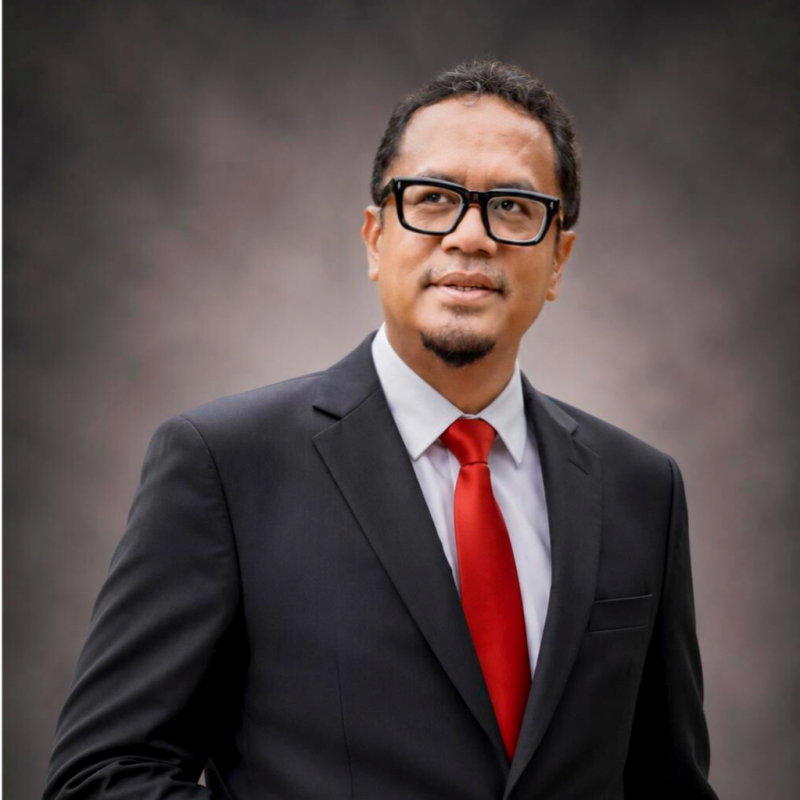
THE AUTHOR
Read more


FEATURE – When faced with a crisis, like the current one, it is natural to wonder, “Why bother?”. Yet, this is when we most need a growth mindset and a framework like lean thinking to figure out a way forward.

FEATURE – The authors explain why putting value at the heart of customer discussions is key to developing a successful, resilient tech firm.

FEATURE – Using Carol Dweck’s distinction between fixed and growth mindsets, the author discusses how leaders should think and act to make lean possible. Looks like no fixed mindset is beyond saving.
INTERVIEW – At the recent Lean Transformation Summit in Las Vegas, our editor sat down with Nationwide to hear more about the mutual company’s application of lean thinking to IT and how they are working towards getting 9,000 people onboard.
Read more

FEATURE – The continuous flow of developing people’s capabilities throughout their studies and careers is lacking, to say the least. It’s time we saw this as one big value chain.

FEATURE – When middle managers are stressed and overworked, there is no time left for them to improve. Changing the interaction between leaders and teams, using lean principles and empowering people, can truly ignite your transformation.

FEATURE – To develop a lean culture means to develop each lean thinker and help them reach their full potential. Here’s how Aramis Group does it.

NOTES FROM THE GEMBA – This French company provides support to the severely disabled, and is currently using lean thinking to limit employee turnover and recruit faster.