


No, AI can’t replace your management system
FEATURE – The author discusses strategy, building resilient systems, and tech CEOs wanting to get rid of middle management.
Words: Lex Schroeder
While lean leaders in business and academia try to help the business world make sense of our current moment and how to build more effective, healthier organizations, Jack Dorsey, my former CEO at Twitter (back when Twitter was Twitter), wrote a piece back in March on the Block company blog called From Hierarchy to Intelligence about getting rid of middle management altogether. How? By leveraging AI, of course. Cut to July and other companies like VISA are following suit.
Dorsey calls for keeping just three roles in organizations: individual contributors, directly responsible individuals, and “player-coaches.” It’s an interesting proposition, and he asks some good questions and makes some good points (unfortunately using a lot of war references). But simply getting rid of people is not the answer.
Dorsey explains how the Roman army effectively organized people through a “nested hierarchy with a consistent span of control at every level.” (This reminds me of Steve Spear and Kent Bowen’s piece Decoding the DNA of the Toyota Production System, which talks about nested modularity). He references ideas from the “The McKinsey 7-S framework” developed in the 1970s by Tom Peters and Robert Waterman like “Organizational effectiveness required alignment across cultural traits and the human factors that determine whether a strategy actually succeeds.” And he describes “player-coaches” as leaders “who combine building with developing people.” Sound familiar? As lean people, we can see how Lean is all over this piece without the word appearing anywhere in it.
Dorsey says at Block they are questioning the assumption that organizations must be hierarchical with humans as the coordination mechanism. He says AI can perform the coordination functions that hierarchal structures are meant to provide. For this reason, Block is trying to create a “company built as an intelligence (or mini-AGI).” Dorsey writes, “In a conventional company, the intelligence is spread throughout the people and the hierarchy routes it. In this model, the intelligence lives in the system.” I love the idea of organizational models that promote collective intelligence over needless hierarchy that too often gets in the way of the real work to be done, but can AI wholly replace management? No.
Thankfully, Dorsey goes on to say human judgment will still be critical, writing:
“The people are on the edge. The edge is where the action is. The edge is where the intelligence makes contact with reality. People reach into places the model can't go yet… They make the calls the model shouldn't make on its own, especially ethical decisions, novel situations, and high-stakes moments...”
The intelligence lives in the system… What’s fascinating about Dorsey’s piece to me is that the “intelligence lives in the system” idea is what people in the lean community (and living systems community) have been talking about for decades. He’s calling for lean management systems, whether he knows it or not. Except Dorsey is saying that AI is what’s going to get you the information sharing, cross-functional collaboration, fluidity, resilience, and speed that you want, not human beings talking to each other differently, staying in inquiry, and coming to new learning together. Dorsey forgets that humans are the “system,” not AI. In my experience, it is always humans who step in to help the system along, not just intervene if needed. This is what the Toyota Production System got right.
This past spring, I participated in the Organizational Leadership Executive Education Program at Rotman School of Management at the University of Toronto. I didn’t hear the word Lean once, but lean principles were everywhere. Over five days, we talked strategy, finance, personal leadership, and ethical AI. Our strategy conversations focused a good deal on understanding what value creation means. Lean is all about flowing value to the customer with minimal waste, be it time, energy, or resources. We talked about how leaders and teams must work together to create value and the importance of psychological safety. Lean only works when leaders create environments where people feel safe to speak up about problems and contribute ideas for making things better. In our conversations on finance, we talked about the importance of making data-driven decisions. Lean requires people to lead with facts; data is your foundation for running useful experiments that lead to new learning. And in our ethical AI conversations, we talked a lot about how human judgment needs to underpin and drive everything. You can use AI to create value or use it to create a ton of workslop, ahem, waste. And while our group conversations on personal leadership weren’t so much about Lean—they were more about limiting beliefs (the stories we tell ourselves about what we’re capable of or what’s possible and what’s not)—we still talked about demonstrating respect and staying in inquiry.
Lean makes way for many of these things, but how do you sell leaders on lean product and process development or lean management systems? I don’t think you do. At this point, I think lean coaches and consultants, Toyota enthusiasts, and systems thinkers can just make lean management systems a resource for leaders if and when, after enough frustration, they seek out new ways of doing things because the old ways aren’t working. Of course, to build more resilient organizations through lean management systems, you need to keep people around; you can’t let too many people go. You must do the old-fashioned, hard work of building a real team. (Anyone excited about the new season of Ted Lasso?!)
There are so many unanswered questions about how our organizations are going to change with the emergence of generative AI, but just like Lean, AI isn’t a panacea. A more useful question than, “Can we get rid of humans as the coordination mechanism in organizations?” will be, “What kinds of work principles, systems, and practices do we need in the future (and right now), given all the problems we’re facing?” This is where lean management systems can help.
But yes to the intelligence living in the system, absolutely. The question is, what kinds of systems do we want? And do we want to take care of humans as we build them? And do we want to take care of the Earth? And where can AI serve without doing harm? These are the questions I’m interested in hearing more people speak to, not whether we can “get AI to do this human thing, too.”
THE AUTHOR

Read more
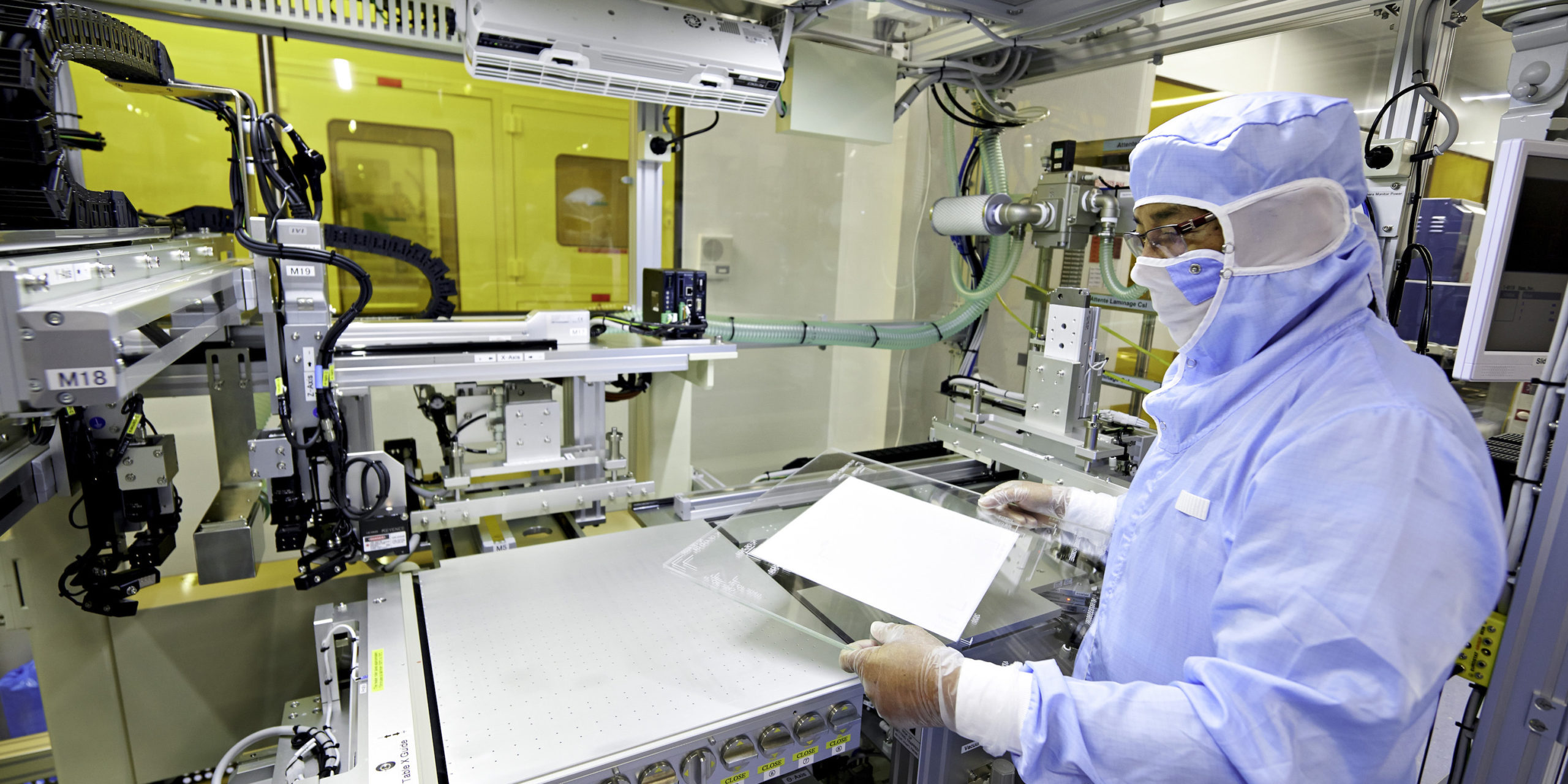

NOTES FROM THE GEMBA – A culture in which problems are tackled as soon as they appear and the production and product development teams work closely together is helping this French healthcare technology company to thrive.

OPINION – Discussing the lack of structured problem solving in the fight against the pandemic in Italy, the author makes the case for blanket-testing as a possible way to understand the current state.

FEATURE – After Singapore Institute of Technology staff was introduced to lean thinking, a course was launched to provide healthcare workers with the lean skills they need to transform their organizations.
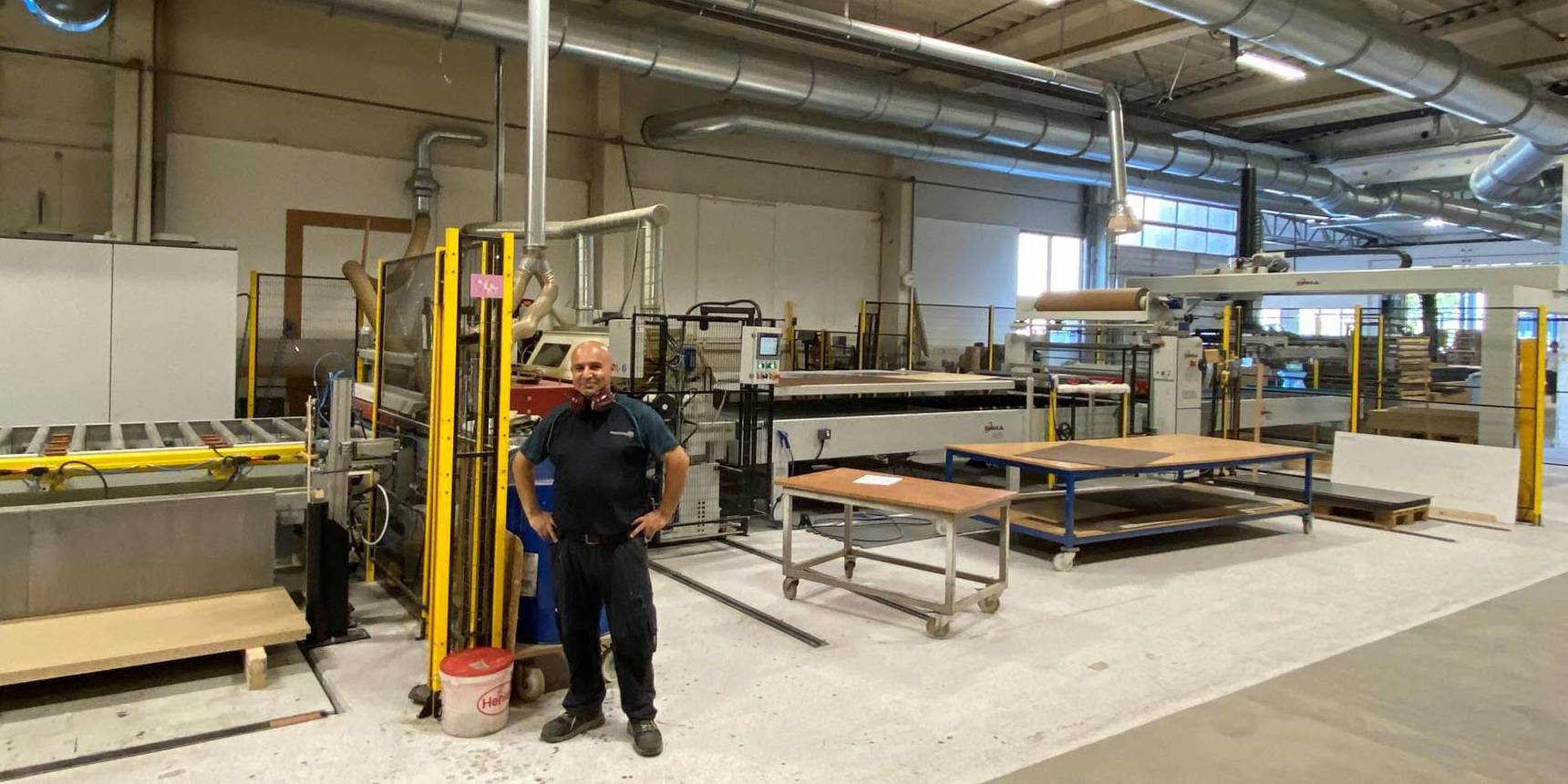
CASE STUDY – The story of Norwegian furniture manufacturer Haugstad Møbel that, thanks to Lean Thinking, was able to transform its culture and unlock the potential of sustainable growth.
Read more

FEATURE – A bad management system generates distortions that represent the root cause of many of the problems experienced by organizations.
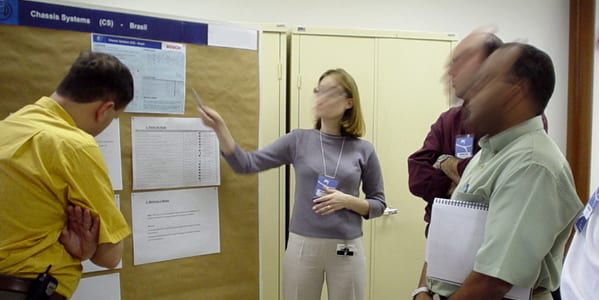
FEATURE - With daily management at the heart of its modus operandi, an organization will be able to quickly identify deviation, start solving problems and make strategy deployment a success.

FEATURE – A senior executive of a Spanish hotel chain shares an example of how the organization’s management system and visual tools have changed over time.

FEATURE – Between hype and skepticism, understanding AI’s true capabilities is essential for leaders seeking to applyit meaningfully within their organizations.