

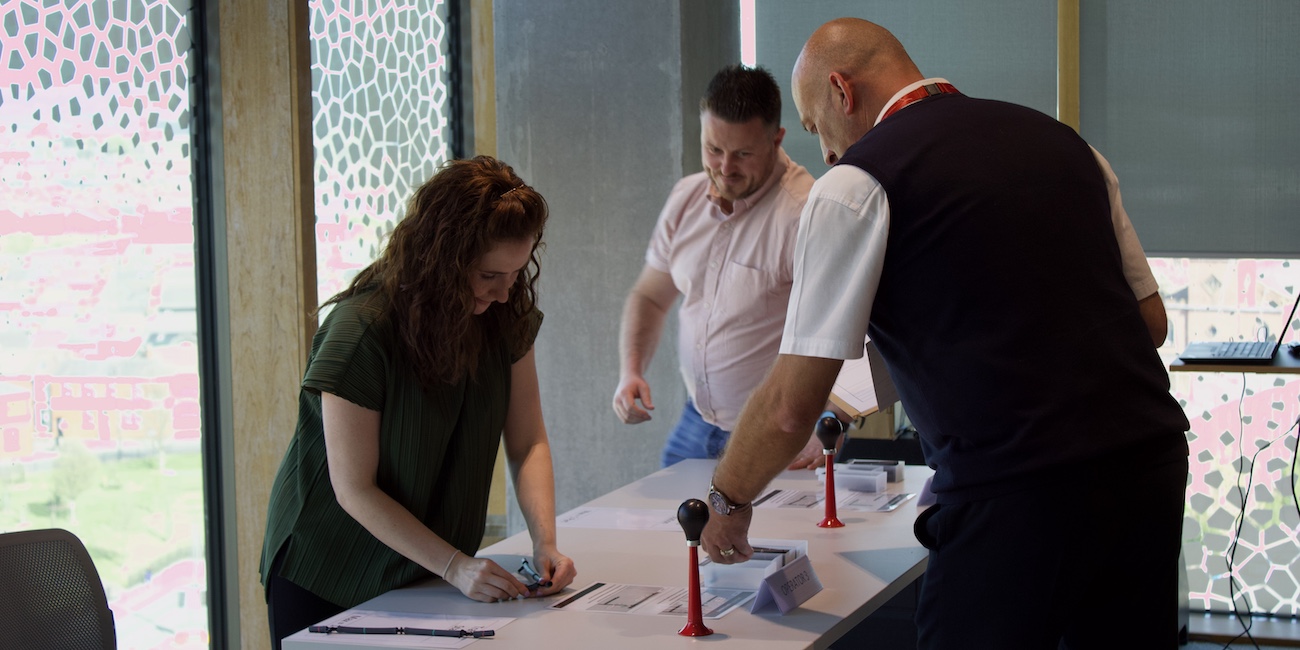
Inside the UK Lean Summit 2026
INTERVIEW – Ahead of this month’s UK Lean Summit, Dave Brunt shares some of the highlights of this year’s event and tells us about how Lean Enterprise Academy ensures every summit is relevant to attendees.
Interviewee: Dave Brunt
Planet Lean: What can we expect from this year's UK Lean Summit?
Dave Brunt: This year’s UK Lean Summit has been redesigned to deliver a high-impact learning experience for organizations at any stage of their lean journey. We’ve moved to a focused one-day Summit taking place on April 29th, at The Spine in Liverpool, bringing together leaders and lean practitioners from across sectors.
The event is organized around a clear purpose. Firstly, to show how Lean Thinking can tackle today’s problems while preparing organizations for tomorrow. Secondly, to raise awareness of the latest developments in the world of Lean Thinking and Practice. Thirdly, to provide practical ways to start, deepen or sustain a lean transformation. And finally, to help participants build a strong network of likeminded practitioners.
Alongside the Summit itself, we’ve also introduced something new this year—Lean Practice Days in collaboration with Toyota UK, which allow participants to deepen their learning through structured observation and reflection at the gemba.
PL: Give us some of the highlights, please.
DB: The Summit combines five keynote presentations with sixteen practical sharing sessions, bringing together practitioners from a wide range of sectors and contexts. One highlight will be Simon Rowley from Toyota Motor Manufacturing UK and the Toyota Lean Management Centre, who will explore “the essence of lean at Toyota.”
We’ll also hear from Nicole Preston, who will discuss lean construction and the application of lean principles on the A14/Balfour Beatty project. Richard Firmstone from Automotive Manufacturer YASA will share insights into scaling the axial flux electric motor through Lean. In addition, the Lean Enterprise Academy team will introduce “Lean Practice,” a book grounded in more than a decade of research, exploring how organizations can develop capability and practically apply Lean.
The sharing sessions provide deeper exploration of specific topics including hoshin kanri, problem solving, value stream design, daily tiered management and the application of AI within a lean context. Overall, the agenda reflects the diversity of Lean Practice today—from global manufacturers to SMEs and service organizations—all sharing how they are leveraging Lean to solve real problems.
PL: How do you ensure you are delivering relevant content year after year?
DB: One of the things that differentiates the UK Lean Summit is that we don’t simply ask people to come and talk about Lean. Instead, we structure the agenda around key research questions that organizations are actively trying to solve.
For example, how do the best organizations define the problems they need to address? How do they align Lean with strategy through approaches, such as hoshin kanri? How do they develop the capabilities required for sustained flow, pull and value delivery? And how do leaders build the behaviors required to create and sustain a lean culture and management system?
We also work closely with organizations across sectors through our learning, teaching and coaching activities, and through our ongoing research into the Lean Transformation Framework (LTF). This gives us continuous insight into the real challenges companies are facing—whether that’s productivity stagnation, digital transformation, supply-chain disruption or capability development.
Many of our speakers are practitioners who are actively applying Lean Thinking in their organizations today, and the interaction between attendees helps ensure that the focus remains on practical application rather than just abstract theory.
PL: What's the idea behind the Lean Practice Days at Toyota?
DB: The Lean Practice Day was developed to help participants move from seeing Lean to understanding and applying it. For many years we’ve organized visits to Toyota UK, and delegates consistently told us that while the experience was extremely valuable, they wanted more structure to help them interpret what they observed and translate that learning into their own situation.
In collaboration with Toyota Motor Manufacturing UK and the Toyota Lean Management Centre, we designed the Lean Practice Day as a structured learning experience built around the five key questions of the Lean Transformation Framework.
Participants begin by preparing through the LEA learning platform, reviewing the five LTF questions before the event. At the Toyota plants in Burnaston or Deeside, they then observe how Toyota addresses these questions in practice through the Toyota Production System (TPS) and the Toyota Way.
Participants use Toyota as a calibration point for their own thinking. They observe how work is done and improved at the gemba, how leaders act as teachers and coaches, and how the management system supports continuous improvement.
Following the observation, participants use our LTF diagnostic tool to reflect on their own organization’s current state and identify the gaps between where they are and where they want to be. The intention is that participants leave not just inspired by what they have seen, but with clear next steps for advancing Lean in their own organization.
UK Lean Summit 2026 will take place on April 29th in Liverpool. Register for the event here.
THE INTERVIEWEE

Read more


FEATURE – Fresh of a study tour in Japan, the authors wonder if there is anything left to learn from Toyota’s network of suppliers in the age of AI and digital. Hint: it’s a rethorical question.

INTERVIEW – An American group of restaurants is experimenting with the application of lean thinking in its kitchens and dining areas. Planet Lean had a word with the chefs to see what’s cooking.

INTERVIEW – This agro-industrial business in Colombia is applying lean thinking to its harvesting process. The harvest manager explains the difficulties and opportunities encountered on the journey so far.
FEATURE – Leading lean transformations in different countries is often considered a challenge. The author claims it’s not as difficult as normally assumed, so long as you stick to the lean fundamentals.