

Extending Kanban benefits from the shopfloor to the supply chain
FEATURE – This article explores the benefits of an electronic kanban and explains how it enables a truly lean supply chain.
Words: Francesco Dall’Oca
Kanban is widely recognized as a powerful method for managing material replenishment in lean manufacturing. Traditionally applied within the shopfloor to optimize internal logistics, kanban ensures that materials flow seamlessly through production processes, reducing waste and eliminating excess inventory. However, by leveraging electronic kanban (e-kanban), companies can extend these benefits beyond their internal operations to create a more responsive and efficient supply chain.
THE LIMITS OF TRADITIONAL KANBAN IN MANAGING EXTERNAL SUPPLIERS
Many companies successfully implement kanban within their production facilities to regulate material flow between workstations. This approach minimizes stock levels, improves lead times, and enhances overall efficiency. However, when it comes to coordinating with external suppliers, traditional kanban can face limitations, such as:
- Manual signal transmission: physical kanban cards require human intervention to be collected, processed, and sent to suppliers as email orders, introducing delays and potential errors.
- Lack of real-time visibility: suppliers may not have immediate access to consumption data, leading to reactive rather than proactive replenishment.
- Difficulty in managing variability: fluctuations in demand or production schedules require dynamic adjustments that manual kanban systems struggle to accommodate.
These limitations are easily overcome by the implementation of an electronic kanban system.
WHAT IS AN ELECTRONIC KANBAN SYSTEM
An electronic kanban (e-kanban) system is an evolution of the traditional kanban process: it is a result of the digitalization of the information processes that concern the management of the kanban itself.
This digitalization occurs through the integration of:
- An "electronic kanban software" or "e-kanban software" like KanbanBOX, which can be integrated with the company’s ERP.
- Common hardware devices like PC/screens with Internet connection, kanban card printers, scanning devices.
With minimal effort, business can transition from traditional kanban to electronic kanban systems that provide instant updates, data collection/analysis, enhances accuracy, and reduce the risk of stockouts or overproduction.
DIGITAL TRANSMISSION OF KANBAN SIGNAL TO SUPPLIERS
One of the main advantages of an electronic kanban is the digitalization of kanban signals and their transmission to ensure seamless and real-time communication between the production floor and external suppliers.
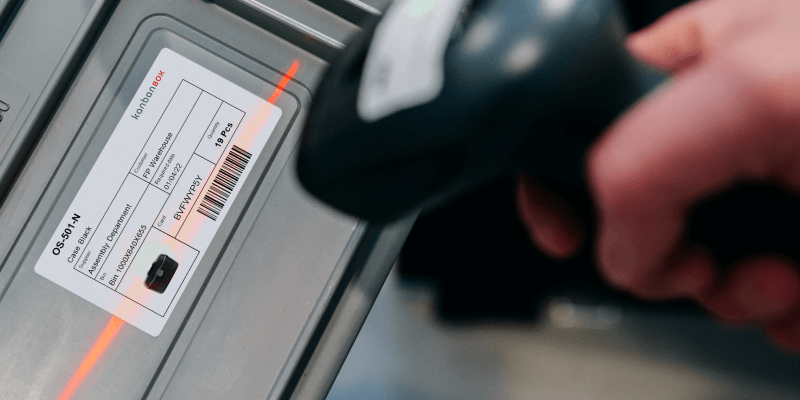
Here’s how it works. When operators empty a kanban container, they scan the kanban card attached to it. This action is detected by the e-kanban software, which immediately records that the container has been emptied, and that material replenishment is required. The information is instantly visible to both internal teams, such as the purchasing office, and external suppliers. Suppliers, having access to a shared dashboard of the software, can see the new pre-authorized order and initiate replenishment without the need for manual approvals or delays.
HOW ELECTRONIC KANBAN LEVERAGES SUPPLY CHAIN INTEGRATION
Electronic kanban digitalizes the transmission of replenishment signals, eliminating inefficiencies associated with traditional kanban. By integrating suppliers into an e-kanban system, companies can extend lean principles across their supply chain.
There are a number of advantages to this, which include:
- Automated transmission of replenishment signals: consumption data is captured in real time and instantly communicated to suppliers, ensuring timely material replenishment without delays.
- End-to-end visibility: suppliers gain direct insight into stock levels and production needs, allowing them to align their deliveries with actual consumption patterns. This transparency is useful for creating a better relationship with the suppliers.
- Improved responsiveness: electronic kanban systems allow for rapid adjustments in response to fluctuations in demand, ensuring supply chain agility.
- Data-driven optimization: e-kanban provides valuable data analytics that can be used to refine inventory policies, optimize order quantities, and enhance supplier performance.
- Higher purchasing office efficiency: with complete visibility on order status for all suppliers, as well as the possibility to pre-authorize orders, the purchasing office can eliminate bottlenecks and free up time to focus on more value-adding activities.
A LEAN AND CONNECTED SUPPLY CHAIN
Extending kanban benefits from the shopfloor to the supply chain through e-kanban transforms supplier collaboration, fostering a seamless and synchronized replenishment process. This approach enhances supply chain resilience, reduces material shortages, and aligns procurement with lean manufacturing goals.
By adopting electronic kanban, companies can move beyond localized improvements and create a truly lean supply chain, unlocking higher efficiency, better resource utilization, and a more competitive operational model.
You can find more information about electronic kanban on the KanbanBOX website www.kanbanbox.com/blog/
THE AUTHOR

Read more


INTERVIEW – Atlantis Foundries was able to achieve zero defects for three months in a row thanks to machine learning. Here’s why the human component can’t be discounted.
FEATURE – In the final article of her series, the author spends a day with Theodo’s CEO and co-founder to learn how lean informs its strategy and vision.

FEATURE – An obeya room can be the cornerstone of a lean transformation, but developing a successful visual management environment is easier said than done. Nike’s Technology department shares a few tips.

FEATURE – Lean healthcare is new to China. The authors share some examples of improvements projects taking place in Chinese hospitals, which they hope will inspire more organizations to take lean on.
Read more

FEATURE – The author explores the relationship between kanban and improvement and discusses how using it can impact our lean transformation.

FEATURE – Using an effective example from every-day life, the author discusses why Kanban is the gateway to Lean Thinking – and not just a tool.
THE TOOLS CORNER – In this new series, we go back to basics, offering a guide on how to implement some of the most important lean tools and explaining why they are so clever. First up, Kanban.

INTERVIEW – Overburdened and worn out? Visualizing your tasks using Personal Kanban can help you make sense of a busy schedule and reduce your stress, says Jim Benson.