

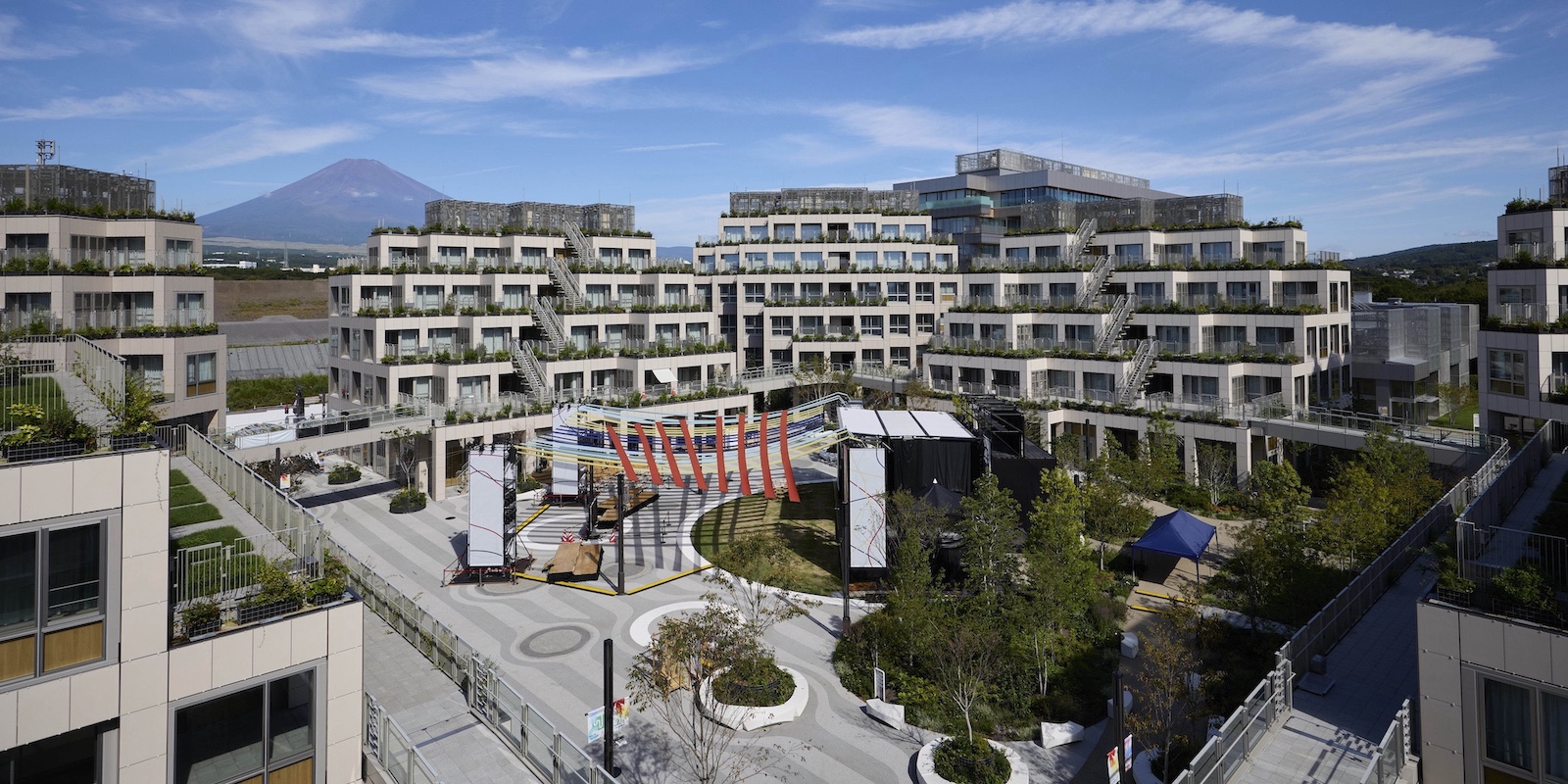
Toyota and radical innovation: a lean view of Woven City
FEATURE – Toyota’s Woven City provides a blueprint for radical innovation based on a three-level learning architecture and “kakezan” partnerships, enabling experimentation, real-world validation, and scalable value creation.
Words: Marie-Pia Ignace
What does radical innovation look like in a lean organization? To answer this question, it’s worth looking at Toyota—more specifically, at the interesting experiment it’s running at Woven City.
The company explicitly presents the project as a “test course for mobility.” Its aim is to enable experimentation with new forms of mobility, services, housing, energy, and technological coordination in real-life conditions. Phase 1 of this project was completed in 2024, with the official launch taking place in 2025. The first accounts of life in Woven City, which will eventually host around 2,000 residents, are now starting to emerge.
Even in its early days, the project deserves the attention of us lean thinkers, because it seems to reflect a very Toyota way of tackling radical innovation and offers a glimpse into how Lean can be applied to the design of new systems. In this article, I’ll tap into Toyota’s own reporting as well as my experience working in the realm of IT and digital and studying their interaction with Lean Thinking.
PURPOSE AND REAL-WORLD LEARNING
At first glance, Woven City appears to move Toyota into unfamiliar territory, bringing together AI, autonomous mobility, robotics, connected housing, energy systems, and digital services. Yet, looking more closely, the project seems less like a collection of advanced technologies and more like a system guided by a clear strategic purpose: exploring mobility in a broad sense—across people, goods, information, and energy.
In this respect, Woven City is another expression of Toyota’s recent reframing as a mobility company. Technology is not pursued for its own sake, but as a means to serve a purpose and shape new ways of living and interacting. The emphasis is not on the sophistication of individual solutions, but on their impact in real contexts.
This becomes particularly visible in how innovation is tested. Within Woven City, Toyota distinguishes between “inventors,” who design solutions, and “weavers,” the residents who live with them. In doing so, validation shifts from controlled environments to every-day use, where habits, constraints, and variability reveal what works and what doesn’t.
Woven City therefore suggests an approach in which innovation does not end with design but continues through real-world interaction, adjustments, and learning.
INDUSTRIALIZING INNOVATION WITHOUT BUREAUCRATIZING IT
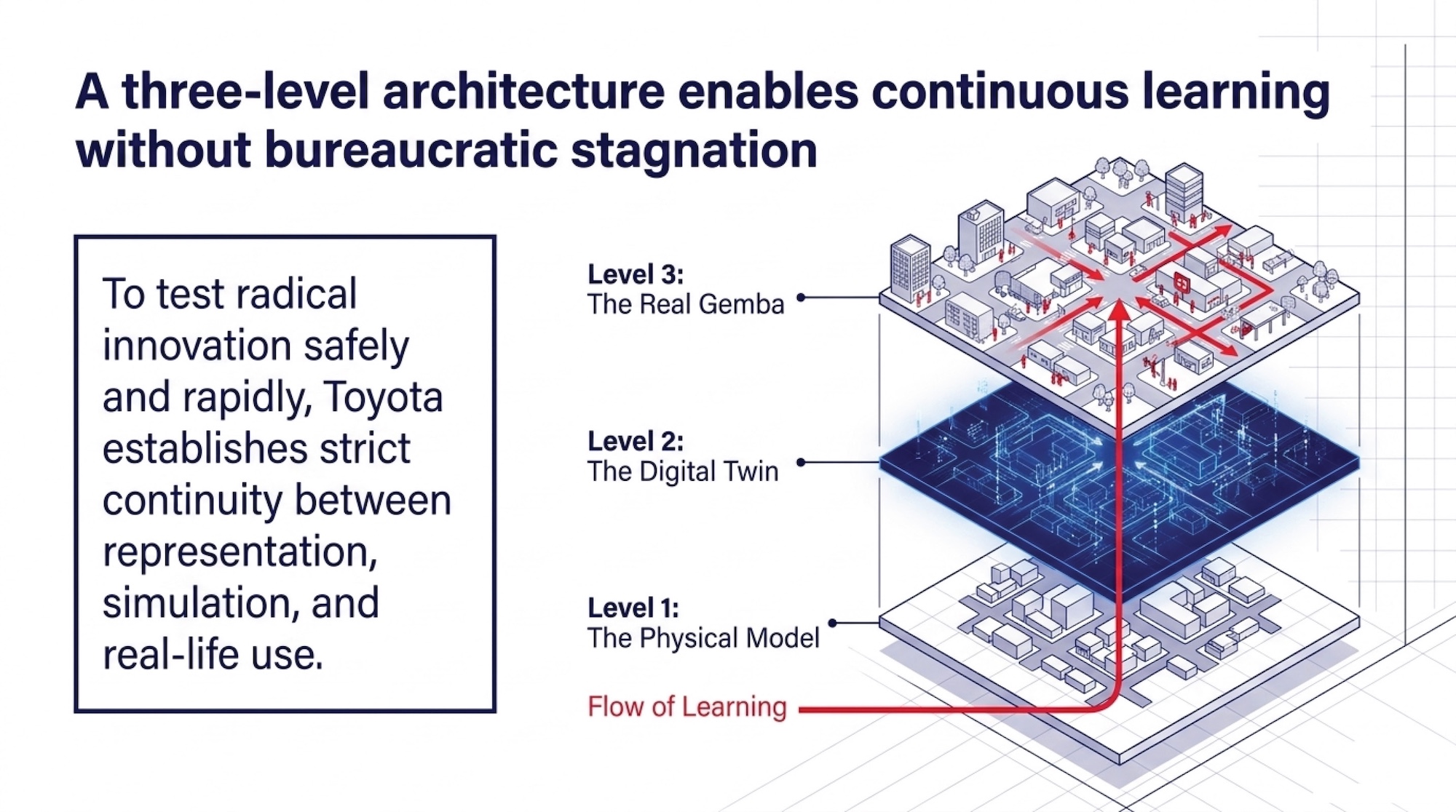
Another intriguing aspect about Woven City is that it enables the conditions for learning. Toyota appears to deploy a multi-level architecture that allows a flow of technological innovation to circulate without either falling into the chaos of scattered experimentation or getting stuck into bureaucratic procedures.
- First level: seeing the system
Toyota showcases a detailed model of Woven City in its Nihonbashi offices. This is not anecdotal. The model is not only meant to represent the future city; it makes the system visible, tangible, and discussable. Before digital experimentation or real use, Toyota first seeks to see flows, interfaces, and relationships between system elements. In a lean reading, this first step is fundamental—you cannot improve what you cannot see.
- Second level: testing quickly
Woven City follows a “software-first” logic in which teams begin by building digital models to understand how to improve the real city. This “digital twin” allows for exploration of possibilities, rapid comparison of design choices, and parallel testing that would otherwise be difficult to conduct. This point is critical: digital is not an add-on, but a means to accelerate learning cycles. It reflects a form of kaizen amplified by simulation tools—more variants tested, faster, before moving to reality.
- Third level: learning in real life
Woven City then enters a phase where innovation is no longer measured by theoretical consistency but by its ability to hold up in daily life. At the official launch, Toyota indicated that, starting in autumn 2025, an initial group of around 100 residents—mainly Toyota and Woven by Toyota employees and their families—would be moving in, the first phase of a planned ramp-up toward a larger population. The accounts published this year refer to the beginning of this real-life “measurement” phase.
This architecture reflects the learning principles at the heart of Lean. It establishes continuity between representation, simulation, and real gemba. Model, digital twin, residents: at each stage, the aim is less about claiming innovation than creating the conditions to observe it, test it, and adjust.
The city thus has the potential to become an infrastructure for kaizen applied not just to a single process, but to a set of services, technologies, and human interactions.
KAKEZAN: ACCELERATING THROUGH PARTNERSHIP
There is another mechanism at play at Woven City, which is complementary to the three-level architecture (how Toyota learns about its own city) described above: the principle of kakezan (“invention through multiplication”) that speaks to how the company multiplies what it learns through designed partnership.
For Toyota, radical innovation cannot be conducted in isolation. Not even Toyota can alone explore all the technologies, uses, and service models that will shape the mobility of tomorrow. The idea is not simply to add competencies, but to generate new value by combining diverse strengths: those of Toyota, of course, but also those of industrial partners, startups, researchers, engineers, entrepreneurs, and other players (a total of 20 at the moment) capable of contributing their building blocks.
Here, too, Toyota taps into an old industrial principle. Its strength has never relied on self-sufficiency, but on its ability to work within an ecosystem of partners while maintaining strong overall coherence. Woven City brings this principle into the world of mobility and urban innovation: Toyota is not trying to invent the city of tomorrow by itself, but is building a framework in which multiple players can test together, faster and more concretely than they could if they each remained confined to their own silos.
Common to the three-level architecture and to kakezan is the idea of digital twins: residents as weavers and partners as contributors are expressions of the same underlying logic—real conditions, real use, real multiplication.

KAKEZAN IN PRACTICE
Over the past two decades, I have worked alongside the IT and digital leadership of some of the world's largest organizations, supporting their adoption of Lean Thinking. During that time, these companies have virtually explored every available model for radical innovation, trying to draw inspiration from entrepreneurial ventures to develop new offerings, launching internal incubators and intrapreneurship programs to stimulate employee-driven innovation, or acquiring startups and scale-ups to expand their portfolios. Each of these approaches has eventually failed to deliver. Meanwhile, the world has continued to transform at unprecedented speed.
A different path has recently emerged: opening one's environment to fully independent companies. Toyota's Woven City is one of the most ambitious expressions of this model, but it isn’t the only one. Of the companies I have worked with over the years, Michelin offers the most instructive parallel. Having accompanied their IT and digital leadership for close to a decade, I can describe the practice with some precision.
Entering the kakezan dynamic requires sustained strategic reflection, the kind that lean practitioners will recognize as the work of hoshin kanri.
The first condition is a clear True North, owned by the leading company. Michelin's “Motion for Life” purpose creates a frame that extends well beyond tires, paving the way for partnerships around mobility, safety, fleet management, data, services, and sustainability. Woven City's own stated purpose (“We're driving the future of movement and enhancing well-being for all”) plays the same role: enabling partners operating in sectors as varied as food, education, energy, and housing to coexist and move in a common direction.
The second condition for kakezan is a designed framework for partnership, creating the conditions under which external actors (established companies, startups, researchers, entrepreneurs) can engage around a shared goal. Partners are not simply “added” but selected for their ability to contribute to the purpose and be validated against others. This selection hinges on a structured concept paper each candidate must produce, outlining the customer problem and proposed technical approach. For applicants, it clarifies the value of the partnership; for the company, it provides a quick way to distinguish viable collaborations from unworkable ones. In this sense, the concept paper is the first “catchball” moment, testing alignment before any commitment is made.
The third condition is a standardized integration architecture. It demands the deepest rethinking and is where the gap between intention and practice is widest. Without it, partnerships stall in coordination meetings, custom integrations, and local workarounds. The shift required is structural: from closed, vertically integrated systems to modular, open platforms. This begins with generalizing APIs—interfaces that allow external parties to connect to system capabilities without understanding or disrupting internal logic. At Michelin, this meant moving away from bespoke, project-by-project integrations (often slow, inconsistent, and hard to reuse) toward a lean software factory exposing standardized APIs. This allows both partners and internal teams to build on shared capabilities rather than reinventing them.
I have seen this dynamic at play in the mobility space, as Michelin started equipping its tires with IoT sensors, allowing it to capture large volumes of geolocated usage data across millions of journeys. Internally, this created a new understanding of real-world conditions, but turning this into industrial capability—capturing, processing, and exposing data—required continuous kaizen within the organization.
The multiplication effect promised by kakezan, however, does not come from data alone. It comes from the ability to expose this data through structured interfaces and make it available to partners. In this model, Michelin does not attempt to anticipate all possible uses; instead, its partners take on the responsibility of exploring new services, applications, and business models, testing them against real market conditions.
At both Michelin and Toyota, the digital twin approach provides a living model of the real system that enables rapid prototyping and experimentation without touching the operational environment. This allows the companies to test innovation at speed, with minimal risk and without impacting the run. Toyota takes this one step further: by developing a proprietary AI model for video image interpretation and making it available to its community of inventors, it offers not merely an integration environment but a new technological capability—one that enables partners to conceive ideas that would have otherwise been out of reach.
In this light, kakezan is not collaboration by intention; it’s multiplication by designed conditions.
CONCLUSION
Woven City may still be in its early stages, but it already offers a compelling view of what radical innovation looks like in a lean organization. What stands out is not any single technology, but the system Toyota is designing around it.
The three-level architecture creates the conditions for disciplined learning (linking representation, simulation, and real-life use), while kakezan extends this learning beyond Toyota, structuring how partners contribute and multiply value.
Together, these mechanisms address a challenge many organizations struggle with: how to experiment broadly without losing coherence, and how to scale innovation without bureaucratizing it. Both learning and partnerships are designed into the system.
In this sense, Woven City is less a “city of the future” than an experiment in how to continuously generate and absorb innovation. It reflects a distinctly lean approach: not breakthrough ideas in isolation, but the conditions for ideas to be tested, combined, and improved in real contexts.
THE AUTHOR

Read more


PROFILE – We may think it is cut and dried, but lean thinking is, in fact, full of paradoxes and trade-offs. According to Cécile Roche, learning to navigate them is one of the defining traits of a lean leader.

CASE STUDY - Faced with high costs, low demand and growing competition from China, Turkish textile manufacturer Yesim managed to develop a competitive advantage by transforming its ways with lean thinking and increasing its focus on the customer

CASE STUDY – By streamlining its internal processes, an agribusiness company in Brazil managed to reduce its material handling cycle time by 75% and the associated costs by 66%.
INTERVIEW – AI will shrink companies and workflows, challenging human relevance. In a world of accelerating technological disruption, Lean Thinking and adaptability are more important than ever.
Read more
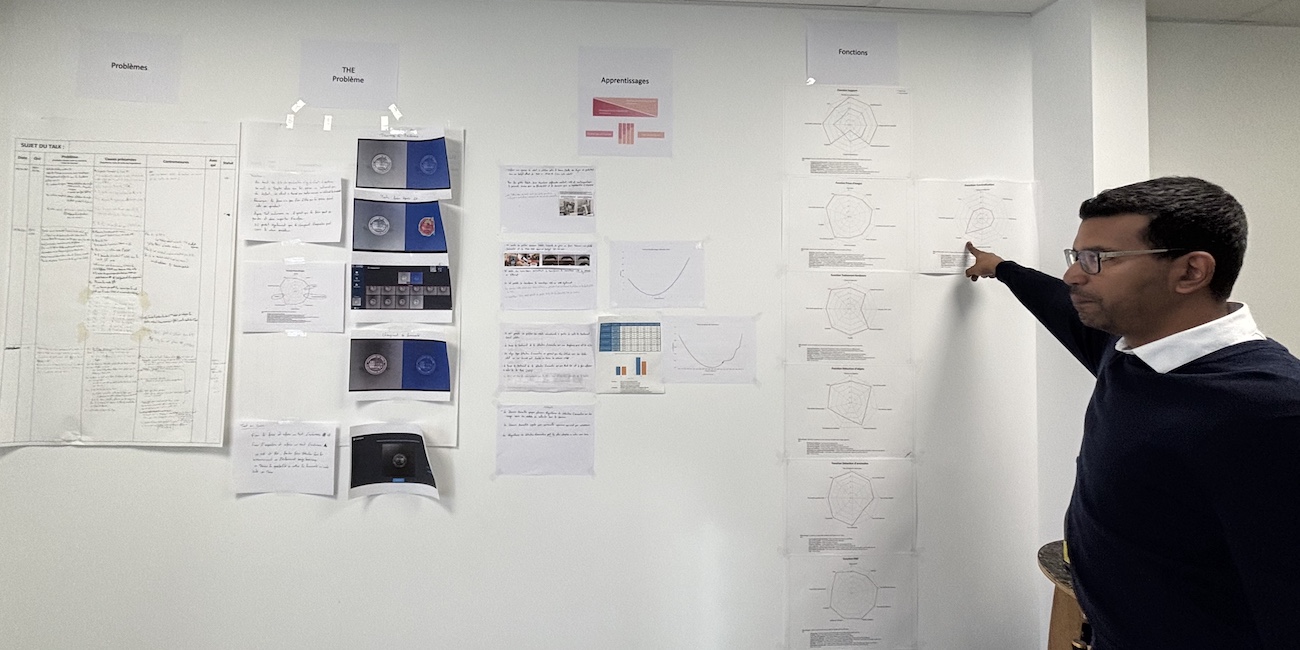
CASE STUDY – This French firm transformed its engineering approach through continuous learning, radical redesign, and user-driven innovation, evolving into a lean, resilient company with a strong culture of development.
FEATURE – Innovation is a process and lean thinking allows that process to take place, by empowering everyone in the company to think creatively about solving customer problems.
FEATURE – Following a visit to a Toyota supplier in Japan, the authors reflect on the nature of kaizen and explain why we might be looking for it in the wrong place.
INTERVIEW – Toyota’s approach to developing capabilities and its focus on life-long learning are inspirational. But how do people at Toyota actually learn?