


Pets and management: Lean to scale veterinary services
CASE STUDY – How a Brazilian clinic is launching a lean journey to support a monthly subscription model, standardizing care through digital protocols while boosting clinical effectiveness and customer satisfaction.
Words: Larissa Goto Sala, Lívia Romeiro and Stela Maris Coelho
For some time now, the Brazilian pet market—covering companion and domestic animals—has been one of the most dynamic and resilient sectors of the national economy. According to Instituto Pet Brasil (IPB), the sector generated more than R$68 billion ($13-14 billion) in 2024, with projections consistently pointing to growth, even in periods of crisis. Driven by the care, attention—and spending—of its pet owners, Brazil now ranks third in the global pet market, behind only the United States and China.
However, it would be a mistake to think that this makes things easier for the veterinary services segment (consultations, tests, and procedures), which represents the second-largest revenue pillar in the industry (after nutrition), accounting for 15% to 18% of the market.
Amid what experts call a “sophistication of demand,” pet owners are becoming increasingly attentive, expecting standards of care equivalent to—or even higher than—those in human medicine. It is now common for clients to arrive at clinics already informed, having researched symptoms, treatments, and medications. This requires veterinarians, clinics, and hospitals to operate with ever-higher levels of expertise, infrastructure, technology, and service quality.
This challenge is even greater in the state of São Paulo, which, according to IPB and the Regional Veterinary Council (CRMV-SP), accounts for about 40% of the national market. The city of São Paulo drives this performance due to both high purchasing power in certain areas and a dense population of pets.
Within this dynamic, prosperous, yet challenging environment, Modern Pets—a veterinary services startup founded in 2023 in São Paulo—is implementing a lean system to improve its management and build a solid foundation for innovative services.
Recently, the clinic launched a subscription-based veterinary service package, with an average monthly cost of R$65 ($13). This offers an alternative to the traditional fee-for-service model, often criticized for being costly, fragmented, and inefficient.
With a hybrid structure (both physical and online), the clinic aims to establish a primary care model (for example, the first consultation) that is sustainable, scalable, and replicable. To achieve this, the startup has begun a lean implementation focused on eliminating waste and standardizing clinical practices.
THE “THREE ES” AND STRONG METRICS
Modern Pets’ vision for scaling its business, expanding subscription services, and even democratizing access to quality veterinary care is built on three fundamental pillars, internally called the “Three Es.”
The first is Clinical Effectiveness. The goal—obvious, but not always delivered in this market—is to ensure scientific and technical rigor in all animal care provided.
The second is Efficiency, which focuses on continuously improving processes and resource use, as well as optimizing costs on a daily basis to maintain business viability.
The third is Customer Experience, aiming to deliver care that builds absolute trust between pet owners, professionals, and the clinic.
This strategic mindset has already produced results. Even before the lean initiative, the clinic showed strong performance indicators. For example, it achieved an NPS (Net Promoter Score, a widely used measure of customer loyalty and likelihood to recommend) of 85.
It also recorded a CSAT (Customer Satisfaction Score) of 4.9, indicating very high satisfaction levels. Clinical resolution is also strong: 95% of cases (both in-person and online) are resolved by the clinic’s general practitioners, with fewer than 5% requiring referrals to specialists or emergency hospitals.
THE PROBLEM: VARIABILITY IN RESOURCE USE
Despite these strong indicators, test-related costs remained a challenge. Typical in veterinary medicine, the clinic faced the dilemma of balancing the “overuse” of tests (which creates unnecessary costs and risks for pets) and “underuse” (which may lead to missed diagnoses and higher long-term costs).
The lean improvement effort set an ambitious goal: reduce average testing costs by 35%. To better understand the root causes of these costs, the Modern Pets team conducted a detailed mapping of its main clinical complaints to gain a clearer view of demand.
Historical data showed that preventive care (actions taken while the animal is still healthy to prevent or detect disease early) represented the largest share of visits at 26%. This was followed by gastrointestinal issues (20.5%), dermatological conditions (11%), and nutritional concerns (9%).
To manage this variability, the startup decided to strengthen clinical standardization. Before the study, only 25.8% of complaints had defined clinical protocols, and adherence among veterinarians was just 62%.
THE COUNTERMEASURES
A closer look at the work in the gemba revealed that existing protocols were simply PDFs stored in internal folders. Their low usability meant veterinarians often relied on memory, increasing variability in decision-making.
The solution was to create an internal digital system that automatically tracked adherence to protocols. When protocols were followed, results improved significantly:
- 56% increase in test-use efficiency
- 13% improvement in clinical effectiveness
- 16% increase in treatment adherence by pet owners
- 44% reduction in hospital risk
From there, improvement efforts were divided into two main areas. The first focused on distinguishing between “protocols” and “care pathways.” A protocol is a decision guide for a specific issue (e.g., vomiting and diarrhea), while a care pathway is a longitudinal journey that supports the animal over time (e.g., obesity or oncology cases). This distinction gave veterinarians a clearer framework for decision-making.
The second focused on ensuring execution. Flowcharts were converted into simplified checklists to increase adherence. In addition, a new role, the “Health Navigator,” was introduced. This person coordinates care, acting as a bridge between the patient and the healthcare system, helping owners understand diagnoses and removing barriers to treatment adherence.
INITIAL RESULTS, AND NEXT STEPS
After just two months of implementation, adherence to the new processes rose from 62% to 95%.
Although the 35% cost reduction target has not yet been fully achieved, the project delivered something even more valuable for scalability: a structured, standardized process system that can be consistently followed and measured.
This structure enables the company to predict case patterns—for example, knowing that 3% of animals will experience a vomiting episode each month and understanding the average cost per case. It also revealed that in the vomiting protocol, 90% of cases were resolved with medication alone, without tests (reinforcing the cost-effectiveness of the model).
This early experience at Modern Pets shows that in subscription-based healthcare models, financial efficiency is a byproduct of standardization and clinical quality.
Reducing unnecessary testing costs is only safe when supported by data that ensures pets are receiving exactly the care they need—no more, no less. The startup’s next step is to integrate these protocols directly into electronic medical records, eliminating paper and automating monthly clinical audits.
Modern Pets’ experience sends a clear signal to the market: predictable costs and value delivery depend on a data infrastructure that transforms medical intuition into measurable processes and continuous improvement.
THE AUTHORS



Read more


FEATURE – Using Carol Dweck’s distinction between fixed and growth mindsets, the author discusses how leaders should think and act to make lean possible. Looks like no fixed mindset is beyond saving.

INTERVIEW – In this Q&A, the CEO of EHA Clinics in Nigeria shows how leadership embraced continuous improvement, empowered staff, and shifted from firefighting to coaching, creating safer, more efficient patient-centered care.

COLUMN - For her latest column, Sari Torkkola describes the initial steps that must be taken to move towards becoming a lean CIO and warn us against some of the pitfalls along the way.

FEATURE – The author outlines the role of HR in a lean transformation and explains why our ability to successfully turn around a business largely depends on activities in which HR participates.
Read more
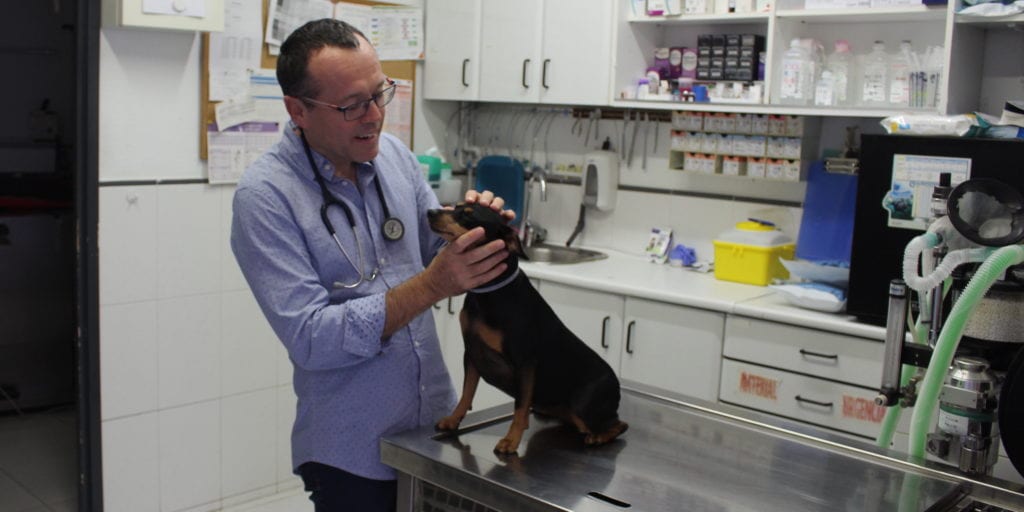
INTERVIEW – A 22-people veterinarian hospital in Barcelona has recently turned to lean thinking. We caught up with the owner to learn how things have changed six months into the journey.

CASE STUDY – Lean thinking is transforming San Diego Zoo Global, helping this century-old organization provide a better experience to its visitors and a better life to its animals.

INTERVIEW – With the Lean Global Connection just two weeks away, we learn more about the lean healthcare content available to attendees.

OPINION – Involvement, active listening and concern are crucial traits of lean leadership and the foundations on which respect for people is built into a learning organization, says Boaz Tamir reflecting on his evolution as a writer.