


Good lean consultants humbly create trust and dialogue
OPINION – After reading the latest book by Edgar H. Schein, the author reflects on the nature of lean consulting and management, and explains why humility must become a defining trait of both.
Words: Boaz Tamir, Founder & President, Israel Lean Enterprise
I just finished reading Edgar H. Schein's latest book, Humble Consulting. In it, Schein – one of the founding fathers of the school of Organizational Development and, to my great fortune, a teacher of mine at the Sloan School of Business – shares some of his insights, developed over 70 years of research, writing, facilitating, and consulting for senior managers.
The main lesson in the book is that every manager or consultant should be humble in their approach to running or supporting a lean transformation, no matter how complex, fast-moving, and unpredictable the environment around them might get.
In today's world, the professionalism of managers is assessed based on their ability to adopt a flexible, adaptive stance (or situational approach, if you will) that has its roots in the deep understanding of the circumstances the customer finds herself in at any given moment in time. We see it everywhere around us: past experience and hierarchical authority provide a rather poor foundation for decision-making. Indeed, a "knowing manager" – that is, the Answer Man Jim Womack recently referred to in his column, who doesn't leave his comfort zone and go out to investigate and learn – is often guilty of the sin of hubris and may find herself on a slippery slope.
CONSULTING AS A METHODOLOGY
As a mentor and guide, Schein has often asked questions that give pause and encouraged managers to step outside of what they know. The first question is often: why should managers leave their comfort zone and change the familiar (and currently successful) process of decision-making? Furthermore – how can a captain be expected to engage in learning, reflection, and dialogue when the ship is navigating stormy seas? What will people think if the captain shares with staff her discomfort about the uncertainty of the situation? And finally, what is the best way for a consultant to help and advise a manager who knows that she must adjust to a changing reality by means of learning?
These are critical questions that we should all try to answer.
Humble Consulting is actually the third of a trilogy of books. First came Helping, which deals with the question of why the helping relationship must be redefined: Schein argues that real, healthy support provides the person receiving it with the ability to cope independently, so that he or she will not be dependent upon the helper any longer. The second book, Humble Inquiry, offers guidance on the secrets of active listening through dialogue and open questions.
As his 90th birthday approaches, Schein proves that the journey of learning and the journey of life coincide beautifully: having written dozens of books and articles, and supported the most senior industrial managers in the world, Schein continues to view humility and asking questions as the foundations of adaptive consulting and management.
In his latest book, he sheds a light on the methodology of "humble consulting" as a dynamic process: whereas traditional "knowing consulting" tends to conduct one-sided mapping and analysis and then provide solutions, the approach Schein describes is an interactive process based on a guided dialogue that takes place throughout the organization.
FIVE STATES OF TRUST
Trust lies at the heart of this system, and it presents itself in three different levels:
- Negative trust, induced by dictatorial, even criminal behavior;
- Basic trust (civil behavior) – the same of someone who is asking a passersby for directions;
- Professional trust, which has three levels – the professional relationships that may exist in a garage or medical clinic (first level); trust among colleagues in a cohort study or investigation team (second level); trust within a family system of relationships (the third and highest level).
The strategy of adaptive (humble) consulting is based on a constant striving to transition from the first level of trust (professional) to the second (necessary for the investigation) and back. (The highest level of trust is limited to particularly intimate relationships, like family or a team on a long research trip or on a military mission.) For example, lean consulting – having its roots in the situational approach that lean thinking encourages us to understand – always begins with an understanding of the purpose, and must align with the needs of the customer in his or her current circumstances. In order to learn and understand the real needs of the customer, a consultant must focus on building a system of trust at the second level, before putting forward a set of tools and adequate countermeasures agreed upon by the team – otherwise you can bet those solutions won't be fit for purpose, and won't help the organization. The raw materials from which the consultant will build this relationship include, according to Schein, "curiosity, affection, and the ability to empathize with the customer."
Reading Schein's book gave me the opportunity to examine my own professional career, and to find the root causes of both my failed and successful attempts at consulting, coaching and managing. Each time I acted as an expert consultant and provided a recipe for success, I impressed my customers for a moment but the value my interventions provided ended up being quite limited. Conversely, the common denominator of the successful consulting relationships I have had was a move from pushing suggestions and knowledge to creating trust and dialogue.
As we all struggle to device and build our value proposition, it appears to me as if the defining word of our time has become "adaptability," which has replaced "innovation" (that characterized the first decade of the 21st century), which in turn had replaced the concept of "excellence" (a staple of the 1990s). An adaptive Managerial Operating System is a necessary tool for coping with the traditional management mindset and with the companies and technologies that are disrupting our markets. Moreover, the values of humility and modesty must be a compass for both consultants and managers as they navigate the choppy waters ahead.
THE AUTHOR

Read more


FEATURE – Variety in sensei approaches can cause a lot of confusion. The author sheds light on the subject by describing a sensei’s five modes of interacting with individuals and teams.
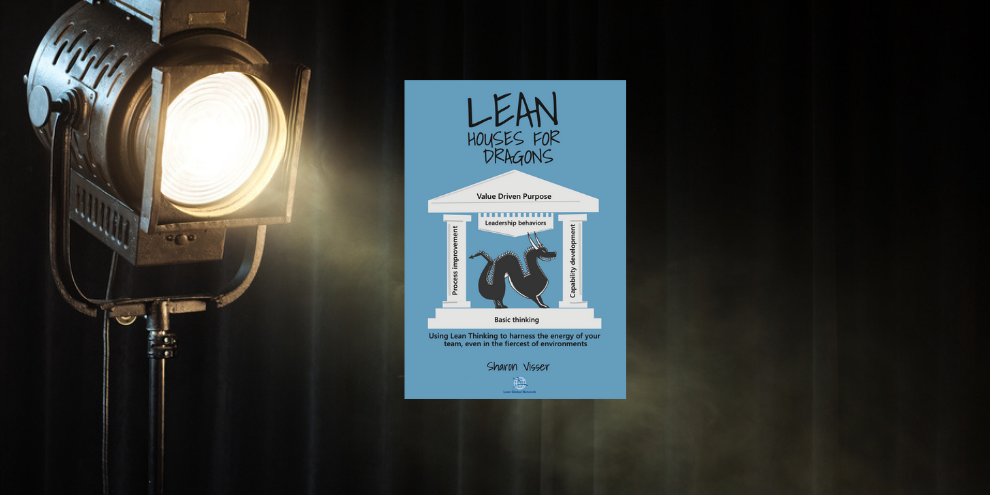
FEATURE – As her new book comes out, the author discusses how it is people who breathe life into an organization and how much a leader’s behavior can influence them.

FEATURE – What can the world of lean and the world of education learn from one another? The author reflects on the synergies between these two realities.

FEATURE – To consistently identify new and better ways of doing things can breathe new life into a lean journey, but only if the knowledge developed can be effectively shared across the organization.